
One morning early last November, I opened my billing statement during breakfast and saw the promotional period had vanished. My bill had jumped from $85 to a crisp $108, replaced by a rate that simply did not match the competitive reality of my suburban Kansas City neighborhood. It felt less like a utility adjustment and more like the moment a contractor adds a surprise line item for 'disposal fees' halfway through a kitchen remodel. You know you’re being squeezed because you’re already committed, but you also know the price of materials hasn't actually changed.
Moving from Chicago to Kansas City in 2018 taught me that home internet is a game of leverage, not loyalty. Since that move, I’ve cycled through six different providers at two addresses, tracking every jitter spike and billing hike. As an IT consultant, I rely on my connection for high-stakes Zoom calls and syncing heavy architecture files, so I treat my ISP like any other vendor. When that bill spiked, I didn't just get annoyed; I started a spreadsheet. Negotiating isn't about being the loudest person on the line—it is about having more data than the person reading the script.
The Preparation: Building Your Leverage
Before picking up the phone, you need to understand exactly what you are paying for and what the market says it is worth. I spent after about a week of research mapping out the fiber lines that stopped just two streets over from my house. I also looked at the FCC broadband definition, which currently sits at 100/20 Mbps. My Spectrum plan was technically exceeding that on the download side, but the upload was dragging like a local train on an express track.

As an IT consultant, I knew my leverage wasn't just 'wanting it cheaper,' but having the local fiber map and my jitter logs ready to prove I had better options. I looked at the new Broadband Consumer Label requirements that ISPs now have to follow. It makes the 'contract reset' clauses look a lot like gym memberships—designed to catch you sleeping in month 13. I noted that for most providers, the new customer eligibility period is a strict 30 days. This means if I actually canceled, I’d have to live without service for a month before getting the 'new' rates again, or have my wife sign up in her name. Having this 'Plan B' ready is essential for a credible negotiation.
Navigating the Retention Department
When you call, the automated system is your first hurdle. Don't waste time with 'Billing' or 'Technical Support.' Those departments are built to solve problems, not prices. You want the 'Retention' or 'Disconnection' department. I navigated the menus by being very clear: 'I am calling to cancel my service.' This is the only way to reach the employees who have the authority to actually override the system.
The steady, rhythmic blink of the router's online light while I sat on speakerphone, staring at my spreadsheet of local fiber providers, felt like a countdown. I sat there in my home office, watching the light cycle through its blue-and-white pattern, knowing that if this didn't work, I’d be swapping that modem out by the weekend. When a human finally picked up, I didn't start with a complaint. I started with a comparison.
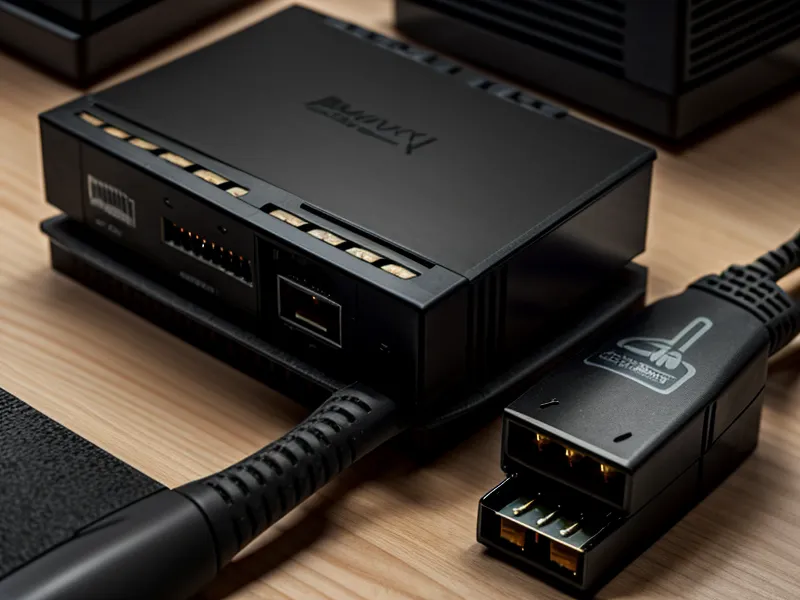
I explained that my current rate didn't align with the local fiber offerings. I specifically mentioned the symmetrical speeds offered nearby—something cable providers struggle with due to the DOCSIS 3.1 protocol. While DOCSIS 3.1 has a theoretical maximum downstream capacity of 10 Gbps, the upload is often the bottleneck. I pointed out that my current hardware only seems to utilize 4 to 8 channels for upstream bonding, which makes my 1000 Mbps download speed feel lopsided when I'm trying to push a 4GB database update to a client.
The Pivot: Asking for Non-Published Legacy Pricing
This is where most people get stuck. The representative will offer you a 'standard' promotion—maybe five dollars off or a temporary speed boost you don't need. Instead of arguing about the monthly total, I focused on the upload speed limitations of the current hardware and mentioned the symmetrical fiber speeds offered two streets over. Then, I used my secret weapon: I explicitly asked for the retention department’s 'non-published legacy pricing.'
Instead of threatening to cancel, explicitly ask for these internal codes to bypass standard promotional offers that trigger long-term rate hikes. Every ISP has these 'loyalty' tiers. They aren't on the website, and the front-line reps can't see them. They are reserved for customers who demonstrate technical literacy and a genuine willingness to leave. I told them, "I know there are legacy rate-lock codes for customers in areas with fiber competition. I'd like to see if we can apply one of those to keep my bill under ninety dollars."

That familiar spike of adrenaline when the representative finally says 'Let me see what I can do,' followed by several minutes of silence, is the part I always hate. You can hear the typing on the other end, the sound of someone navigating a legacy database from 2014. I sat there, just before the winter holidays, wondering if I was about to spend my break setting up a new ISP. I've written about this kind of technical frustration before when I was looking at Spectrum Internet Upload Speed for IT Consultants Managing Large Files, and I knew that the upload speed was my biggest point of contention.
The Result: Securing the Rate Lock
After about four minutes of hold music, the rep came back. They couldn't give me the 'new customer' price of $49, but they found a legacy tier that brought me down to $89 for 24 months. No contract, no equipment fee increase. By demonstrating that I knew about the 10 Gbps theoretical limits of their network versus the real-world upload constraints of my modem, I showed them I wasn't just a casual user they could placate with a free month of HBO.
Successfully securing a new rate-lock by demonstrating technical literacy and a willingness to actually switch providers felt like a major win. I made sure to ask for an emailed confirmation of the new rate before hanging up. I’ve seen too many 'verbal agreements' disappear by the time the next billing cycle rolls around. I also set a calendar reminder for 23 months from now, because the 'autopilot' tax is real, and the ISP is betting on you forgetting.
It’s important to remember that these deals are highly regional. What worked for me in suburban KC might not work in downtown Chicago. If you’re considering a move or a switch, you might find my experience with Quantum Fiber After Three Months: My Notes on Speed, the Bill, and What the Install Tech Got Wrong helpful for comparing how fiber billing differs from the cable negotiation dance.
One humid afternoon in July, I checked my bill again just to be sure. It was still $89. No 'service fees,' no 'infrastructure recovery' surcharges. Just the price we agreed on. Negotiation isn't a one-time event; it’s a maintenance task, like cleaning the gutters or changing the HVAC filter. If you treat it as a professional transaction based on data rather than an emotional plea, you’ll find that the 'firm' prices are often much softer than they look on the website.